Introduction
Snap Planets has become one of the most talked-about additions to Snapchat+, turning a simple best friends list into a visual solar system where the people you snap most orbit closest to you. If you’ve noticed tiny planet icons popping up on your friends’ profiles and wondered what they mean, you’re not alone. This review walks through exactly how the feature works, what it gets right, where it falls short, and whether it’s worth paying for in 2026.
Whether you’re trying to decode your own ranking or figure out why your best friend suddenly became “Neptune,” this guide covers everything you need.
What Is Snap Planets?
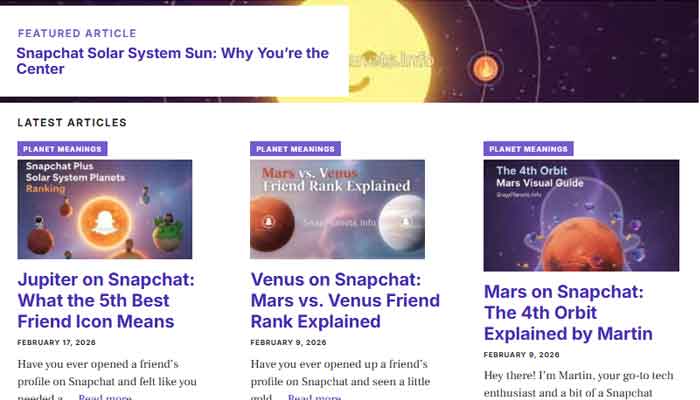
Officially called the Friend Solar System, Snapchat Planets is a Snapchat+ exclusive feature that visualizes your top eight friends as planets orbiting around you, the Sun. The closer a planet sits to the center, the more frequently you interact with that friend through snaps, chats, and streaks.
Unlike the free Best Friends emoji system, which shows small hearts and icons, Snap Planets gives users a more detailed and animated way to see exactly where they stand in someone’s inner circle.
Read More: Quikconsole com Review: What It Really Is in 2026
How the Snapchat Planets System Works
The ranking isn’t manual. Snapchat’s algorithm continuously analyzes interaction data to place each friend on a planet:
- Message frequency — how often you snap or chat with someone
- Response speed — how quickly conversations move back and forth
- Streak activity — ongoing daily snap streaks
- Story engagement — views and replies to each other’s stories
Because the system updates dynamically, your planet position can shift within days if your interaction habits change.
Snapchat Planets in Order
Understanding the snapchat planets order helps you quickly decode where a friend ranks. Here’s the full breakdown from closest to farthest:
- Mercury (#1) – Your top best friend; constant snaps and unbroken streaks
- Venus (#2) – A close second, with daily interaction
- Earth (#3) – Frequent, consistent contact
- Mars (#4) – Regular but slightly less frequent snapping
- Jupiter (#5) – Moderate interaction
- Saturn (#6) – Occasional snaps and chats
- Uranus (#7) – Infrequent contact
- Neptune (#8) – The lowest-ranked spot in your top eight
If a friend doesn’t appear on any planet, they simply aren’t in your top eight — Snapchat doesn’t display negative rankings.
Read More: Neural Link Privacy: How to Protect Your Brain Data
Snapchat Planets Order Best Friends: What It Actually Measures
A common misconception is that the snapchat planets order best friends ranking reflects real-life closeness. In reality, it only measures in-app activity. Two friends who talk constantly by phone or in person but rarely snap each other may rank low, while acquaintances who exchange daily streak snaps could rank high.
This distinction matters for anyone using the feature to gauge friendships:
- It reflects digital behavior, not emotional connection
- It can be skewed by streak maintenance rather than genuine conversation
- Rankings reset or shift as habits change, so a low position today doesn’t mean a permanent status
How to Check Your Snap Planets Position
Setting up and viewing the feature takes just a few steps:
- Subscribe to Snapchat+ (the feature is not available on the free tier)
- Open Settings and enable Friend Solar System, since it’s off by default
- Visit a friend’s profile page
- Tap the Friends badge or gold-ringed Best Friends badge
- View which planet you occupy in their solar system
Note that both users need an active Snapchat+ subscription to see each other’s planet rankings.
Pros & Cons
Pros
- Visually engaging — turns a plain ranking list into an interactive, animated experience
- Real-time updates — rankings reflect current activity rather than outdated data
- Encourages consistency — rewards steady daily interaction over sporadic bursts
- Easy to interpret — the planet-to-rank system is intuitive once you know the order
Cons
- Requires a paid subscription — both users need Snapchat+ to see each other’s planets
- Can encourage unhealthy comparison — some users obsess over ranking rather than genuine connection
- Doesn’t reflect real relationships — purely activity-based, which can misrepresent close friendships
- Limited to eight friends — anyone outside your top eight gets no visibility at all
Final Verdict
Snap Planets is a clever, well-designed feature that makes Snapchat’s existing Best Friends system more visual and fun to explore. It succeeds at what it’s built for: encouraging more frequent interaction and giving Snapchat+ subscribers an extra layer of engagement. However, it shouldn’t be treated as a genuine measure of friendship, since it only tracks app activity.
If you’re already a Snapchat+ subscriber, turning on Snap Planets costs nothing extra and adds a fun layer to the app. If you’re considering subscribing solely for this feature, it’s worth trying for a month before committing long-term, since the novelty may wear off once the initial curiosity fades.
For more Snapchat feature breakdowns, check out our guides on Snapchat Best Friends Emojis Explained and Snapchat+ Features Worth Paying For, or browse our full Snapchat Tips & Tricks hub.
Frequently Asked Questions
Sources: Snapchat Support, Snapchat Newsroom