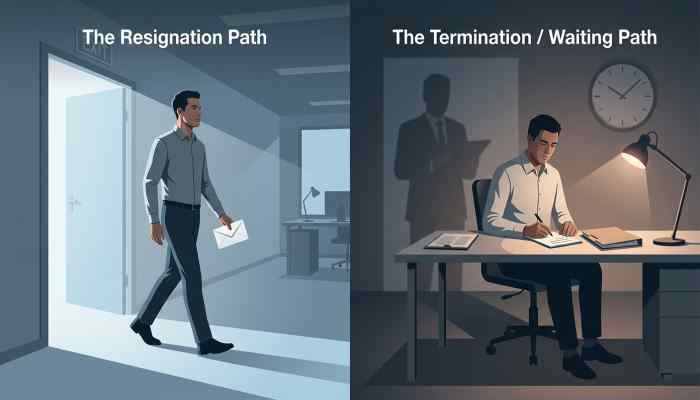
When work becomes unbearable, quitting can feel like the fastest way to regain control.
Maybe your manager has suddenly turned against you. You are being written up for things that were never problems before. You reported harassment and now feel targeted. Your responsibilities are disappearing. Or you have the uncomfortable sense that the company wants you gone but would prefer that you resign first.
At that point, the question becomes practical: Should you quit, or wait to see whether your employer fires you?
There is no universal answer. But resigning during a serious workplace dispute can have consequences employees do not always consider in the moment.
Before making the decision, it helps to understand what changes once you voluntarily leave.
Start With the Reason You Want to Quit
There is an important difference between leaving because you found a better opportunity and leaving because you believe your employer is forcing you out.
If the issue is a difficult manager, frustrating workplace culture, or a job you simply no longer enjoy, moving on may be the right personal decision.
The analysis becomes more complicated when the situation involves potential discrimination, sexual harassment, retaliation, disability accommodations, pregnancy-related issues, protected leave, or another workplace right.
In those situations, the events leading up to the resignation can matter.
Ask yourself what changed.
Were you treated differently after reporting something to HR? Did your performance reviews suddenly deteriorate after years of positive feedback? Were responsibilities removed after you requested an accommodation? Did management begin encouraging you to resign shortly after you returned from protected leave?
Those details may affect how the situation should be evaluated.
Understand the Difference Between Being Fired and Resigning
From an employee’s perspective, both situations end with the same result: you no longer work there.
Legally and practically, however, the path to that result can matter.
When an employer terminates an employee, the employer has made the decision to end the relationship and generally provides some explanation for doing so. That creates a clearer event to evaluate.
When an employee resigns, the employer may later argue that leaving was the employee’s choice.
That does not mean an employee can never have a claim after resigning. California law recognizes circumstances in which working conditions can become so intolerable that a reasonable person would feel compelled to leave, a concept generally known as constructive discharge.
But proving that is different from simply showing that a workplace was unpleasant or that an employee reasonably wanted another job.
This is why the decision deserves more thought than, “I can’t take this anymore.”
Think About Which Decisions Are Reversible
California employment attorney Diana Gevorkian of Employee Rights Attorney Group recommends that employees facing an escalating workplace dispute distinguish between steps that preserve their options and decisions that permanently change them.
Documenting what happened is reversible. Asking questions is reversible. Requesting copies of documents is reversible. Getting legal advice is reversible.
Submitting a resignation usually is not.
Gevorkian describes this as the “irreversible decision” principle: when emotions are high and the legal significance of a workplace situation is unclear, employees should understand their options before taking an action they cannot easily undo.
That does not mean staying in a harmful workplace indefinitely. It means making the decision with a clear understanding of what comes next.
Ask Whether Your Employer Is Encouraging You to Leave
Sometimes the pressure to resign is explicit.
A manager may say:
“Maybe you should start looking elsewhere.”
“This doesn’t seem like a good fit anymore.”
“Wouldn’t you be happier somewhere else?”
Other times the pressure is less direct. Responsibilities disappear. Meetings happen without you. Your schedule becomes less desirable. Every small mistake receives scrutiny. Opportunities that previously came your way suddenly stop.
None of those events automatically establishes unlawful conduct. Companies restructure jobs, managers change expectations, and workplace relationships deteriorate for many legitimate reasons.
But if the pressure begins shortly after protected activity, the timing deserves attention.
An employee who reports sexual harassment on Monday and is encouraged to resign shortly afterward is in a different factual situation from an employee whose relationship with management has been deteriorating for several years.
Context matters.
Look at Your Employment Record Before Making a Decision
Before resigning, review the story your employment records tell.
Look at previous performance evaluations, emails praising your work, promotions, raises, awards, disciplinary records, and communications with management.
Then compare those records with what is happening now.
If management is suddenly claiming that you have always been a poor performer, does the documented history support that explanation?
If you were placed on a performance improvement plan, are the criticisms new? Were expectations clearly communicated? Are the goals realistically achievable? Are coworkers in similar positions held to comparable standards?
Employees often focus entirely on the latest confrontation. An employment attorney evaluating the situation may be just as interested in the months or years that came before it.
Document What Is Happening While You’re Still There
If you believe something improper is happening, create an accurate timeline while the details are fresh.
Record important dates, conversations, complaints, responses, changes in responsibilities, disciplinary actions, and other significant events. Preserve appropriate records you are legally permitted to keep.
Be factual.
“Management is trying to destroy my career” is an interpretation.
“Two weeks after I reported harassment to HR, three accounts I had managed for more than a year were reassigned without explanation” describes an event.
The second type of documentation is far more useful when someone later needs to understand what happened.
Consider What You Have Already Reported
Another question is whether the employer knows about the underlying problem.
Suppose an employee believes a supervisor is discriminating against her because of pregnancy, but she resigns without ever mentioning the concern to HR or management.
Compare that with an employee who submits a detailed written complaint, asks the company to investigate, receives a response, and then experiences additional negative treatment.
Those situations create very different records.
This does not mean every employee must make an internal complaint before leaving. There may be circumstances where reporting internally is inappropriate, unsafe, or unlikely to resolve the issue.
It does mean employees should think carefully about the sequence of events rather than treating resignation as an isolated decision.
What If the Workplace Is Affecting Your Health?
Legal strategy is not the only consideration.
No job is worth ignoring an immediate threat to your health or safety. Employees dealing with serious stress, threats, harassment, or medical issues may have considerations that outweigh the advantages of remaining employed.
Depending on the circumstances, there may also be options other than immediately resigning, including medical leave or workplace accommodations.
The right decision depends on the employee’s situation. This is another reason blanket advice like “never quit” is not particularly useful.
What About Unemployment Benefits?
Employees sometimes assume that quitting automatically makes them ineligible for unemployment benefits or that being fired automatically guarantees eligibility.
The reality is more nuanced.
Eligibility can depend on why the employment relationship ended and the specific circumstances surrounding the separation. An employee considering resignation should therefore avoid making assumptions about benefits based solely on whether the departure is technically labeled a resignation or termination.
This is another practical consequence worth understanding before making the decision.
Should You Talk to an Attorney Before Quitting?
You do not need an attorney every time you want to leave a job.
But when the reason for leaving involves potential wrongful termination, discrimination, sexual harassment, retaliation, pregnancy discrimination, disability rights, or another serious employment issue, the timing of legal advice can matter.
Speaking with an employment attorney before resigning allows the attorney to evaluate the situation while the employee still has choices.
An attorney may want to understand the employee’s performance history, complaints already made, employer responses, relevant documents, potential protected activity, and what changed afterward.
The purpose is not necessarily to prepare a lawsuit. It is to understand the consequences of the available options before choosing one.
Don’t Let an Emotional Moment Make the Decision for You
Workplace disputes are personal. Being criticized unfairly, excluded by coworkers, ignored by HR, or treated differently by a manager can make leaving immediately feel like the only reasonable response.
Sometimes leaving is the right choice.
But if you have spent months or years building a career with an employer, another day spent understanding your options may be worthwhile.
Gather the facts. Review the timeline. Understand what you are being accused of. Consider what you have already