Introduction
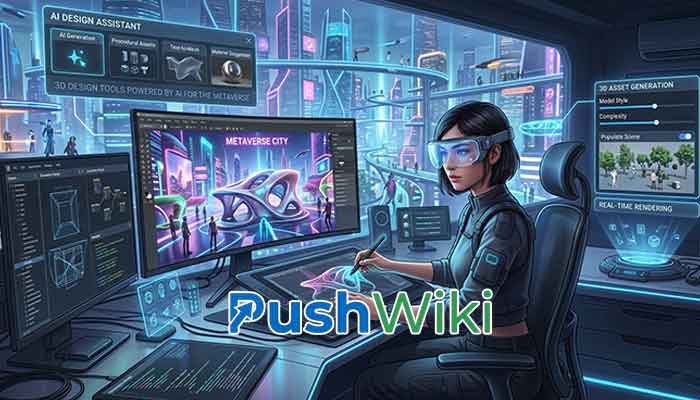
The race to build the Metaverse is accelerating — and the right 3D design tools are now the difference between building a compelling virtual world and falling behind. In 2026, artificial intelligence has fundamentally changed how designers, developers, and creators approach 3D modeling, asset generation, and immersive world-building.
Whether you’re a seasoned 3D artist or just stepping into the world of generative AI for VR, this guide breaks down the most powerful AI-driven platforms available today. These tools don’t just save time — they unlock creative possibilities that were unimaginable just two years ago.
Designers exploring modern 3D design tools can also experiment with a generative AI logo to develop creative brand concepts and explore different visual styles before refining their final designs.
Table of Contents
Why AI Is Transforming 3D Design for the Metaverse
Traditional 3D design workflows are time-intensive, technically demanding, and expensive. Generating a single high-fidelity game asset from scratch could take a professional artist days of work. AI changes that equation entirely.
Modern AI 3D modeling tools use large generative models trained on millions of 3D meshes, textures, and spatial datasets. The result is a new class of tools capable of producing deployment-ready assets in minutes. For Metaverse developers, this means:
- Faster iteration cycles — test and deploy environments rapidly
- Reduced production costs — smaller teams can do more
- Greater accessibility — AI 3D modeling for beginners removes the skill barrier
- Consistent quality — high-fidelity AI design at scale without manual refinement
The tools below represent the current leading edge of this revolution.
Read More: AI Video Editor Tools With Full Scene Generation (2026)
Top AI-Powered 3D Design Tools for the Metaverse
1. Luma AI — Dream Gaussian & Genie

Luma AI’s Genie model is one of the most impressive text-to-3D AI tools available today. Users type a text prompt — say, “futuristic neon archway” — and receive a fully textured, exportable 3D mesh in under 60 seconds.
Key Features:
- Text-to-3D generation with PBR (physically based rendering) textures
- Direct export to
.glb,.obj, and.usdzformats - NeRF-based scene capture from video footage
- Web-based interface with API access for developers
Best For: Rapid Metaverse asset prototyping, indie game developers, and VR experience designers.
Pricing: Free tier available; Pro plans start at $29/month.
2. Meshy — AI 3D Modeling for Beginners and Pros
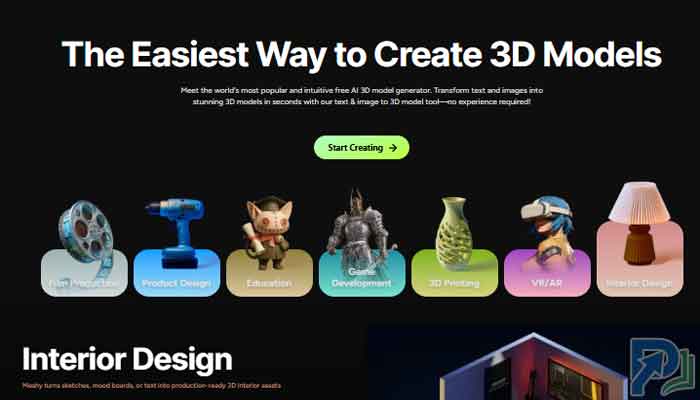
Meshy is purpose-built for creators who need high-quality AI game assets at speed. It supports both text-to-3D and image-to-3D workflows, making it exceptionally versatile.
Key Features:
- Image-to-3D and text-to-3D conversion
- AI-powered texture generation with style controls
- Multi-format export (
.fbx,.obj,.glb,.stl) - Rigging support for animated characters
- Team collaboration workspace
Best For: Game studios, avatar creators, and Metaverse world-builders who need rigged, animatable assets.
Pricing: Free tier (limited credits); Pro from $20/month.
Reference: Meshy Official Documentation — detailed API reference for developers integrating AI asset pipelines.
3. Kaedim — Production-Grade AI 3D Design Tools
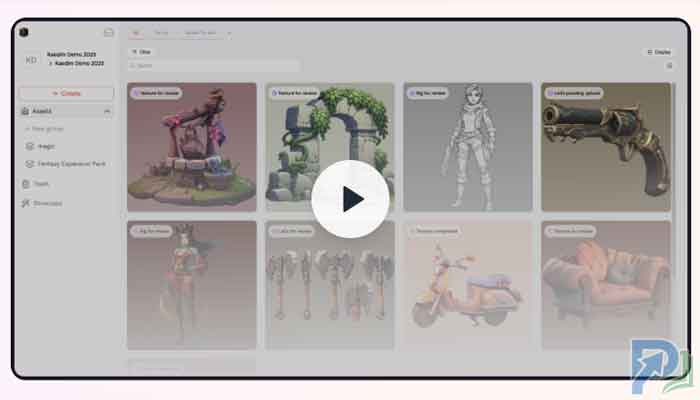
Kaedim converts 2D concept art into clean, game-ready 3D models. Unlike many competitors, Kaedim combines AI generation with a quality-review step, producing assets that meet professional production standards.
Key Features:
- 2D image to fully textured 3D mesh
- Clean topology optimized for game engines (Unity, Unreal Engine 5)
- Low-poly and high-fidelity output options
- Turnaround time under 2 hours
Best For: Studios that need production-ready assets with clean geometry — especially for Unreal Engine–based Metaverse environments.
Pricing: Studio plans available; contact for enterprise pricing.
Read More: AI Porn: More Dangerous Than You Think — Here’s Why I’m Worried
4. Spline AI — Generative AI for VR Web Experiences
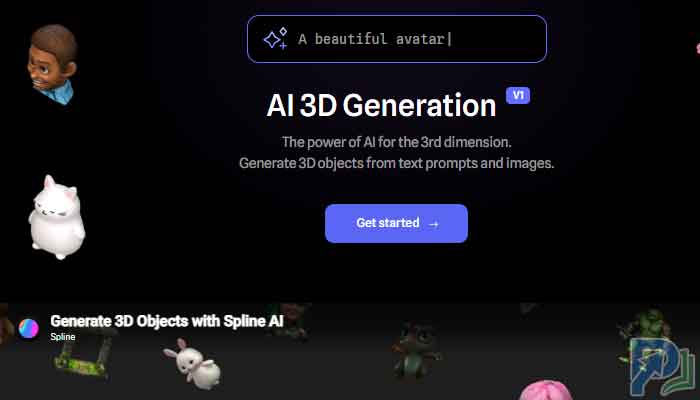
Spline has emerged as a leader for generative AI for VR environments built on the web. Its AI features sit inside a full-featured 3D design editor, making it uniquely accessible.
Key Features:
- AI-generated 3D objects directly inside the editor
- Real-time physics and interactions
- Export to WebGL for browser-based Metaverse platforms
- Animation and scroll-triggered behavior tools
- Integrates with React and other web frameworks
Best For: Web3 platforms, browser-based Metaverse experiences, and front-end developers adding immersive 3D UI.
Pricing: Free plan available; Pro at $9/month — one of the most affordable in this category.
5. NVIDIA Omniverse + AI Tools — High-Fidelity AI Design at Enterprise Scale
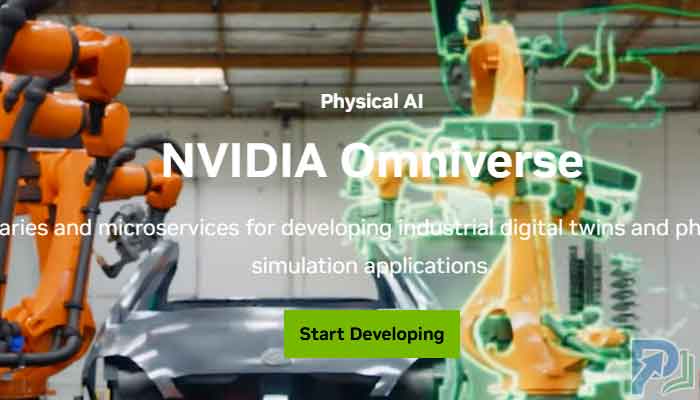
For organizations building serious Metaverse infrastructure, NVIDIA Omniverse is the gold standard. It’s a real-time 3D collaboration and simulation platform now deeply integrated with AI capabilities via NVIDIA ACE and generative AI pipelines.
Key Features:
- Real-time photorealistic rendering with RTX technology
- AI-powered material and texture synthesis
- Digital twin simulation for industrial Metaverse applications
- Multi-user collaboration in a shared virtual workspace
- USD (Universal Scene Description) format support
Best For: Enterprise Metaverse developers, industrial digital twin projects, and teams requiring Hollywood-grade rendering.
Pricing: Free for individual creators; enterprise licensing available.
Reference: NVIDIA Omniverse Developer Documentation — comprehensive setup and API guides.
6. Alpha3D — Automated AI 3D Modeling for E-Commerce and Virtual Worlds
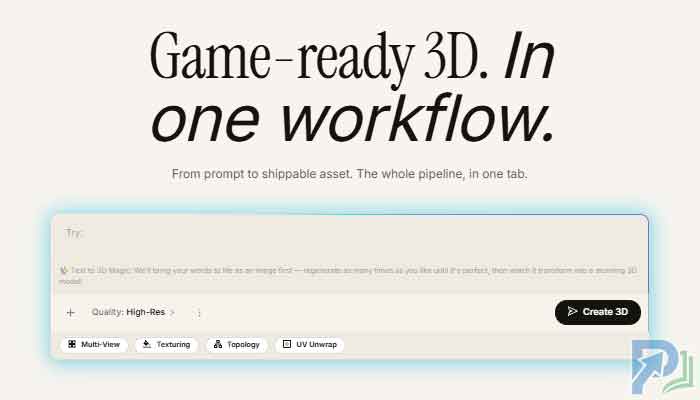
Alpha3D targets a specific but booming use case: turning product images into Metaverse-ready 3D assets at scale. For brands building virtual storefronts or showrooms, this is transformative.
Key Features:
- Bulk image-to-3D processing
- Optimized for AR/VR viewing
- Integration with e-commerce platforms
- Automatic UV unwrapping and PBR texture generation
Best For: Retail brands, e-commerce Metaverse platforms, and product visualization studios.
Pricing: Credit-based model; custom enterprise plans available.
Comparing the Best 3D Design Tools for the Metaverse
| Tool | Best Use Case | Skill Level | Starting Price |
|---|---|---|---|
| Luma AI (Genie) | Text-to-3D rapid prototyping | Beginner–Pro | Free |
| Meshy | Game assets, character rigs | Beginner–Pro | Free |
| Kaedim | Production-ready studio assets | Intermediate–Pro | Custom |
| Spline AI | Web-based VR/Metaverse UI | Beginner–Pro | Free |
| NVIDIA Omniverse | Enterprise, digital twins | Advanced | Free (indie) |
| Alpha3D | E-commerce, product viz | Beginner | Credit-based |
How to Choose the Right AI 3D Modeling Tool
Selecting the right platform depends on your specific workflow. Ask yourself the following questions before committing:
- What is your output format? Different game engines (Unity vs. Unreal) prefer different file types. Make sure your tool exports compatible formats.
- Do you need animation or rigging? Not all text-to-3D AI tools produce rigged meshes. Meshy and Kaedim are better choices for character animation.
- What is your team size? Solo creators can thrive on free tiers; studios should evaluate collaboration features and API access.
- What platform is your Metaverse on? Web-based experiences favor Spline; Unreal Engine–based worlds benefit from Kaedim or Omniverse.
- What is your budget? Most tools offer generous free tiers — start there before upgrading.
The Future of AI-Powered 3D Design Tools
The next 12–18 months will bring significant advances. Multimodal AI systems will allow designers to describe environments using voice, sketch, or reference images and receive fully realized, interactive 3D worlds in return. Real-time generation — where AI builds assets dynamically as users explore virtual spaces — is already in early development at several labs.
We’re also seeing the rise of high-fidelity AI design pipelines that produce assets indistinguishable from hand-crafted professional work. This shift will democratize Metaverse development, empowering solo creators and small studios to build experiences that previously required multi-million-dollar production budgets.
Read More: AI Agents Transforming Personal Productivity in 2026
Conclusion
AI has permanently changed the landscape of 3D design tools — and the Metaverse is the most exciting frontier for this technology. From lightning-fast text-to-3D AI tools like Luma AI’s Genie to enterprise-grade platforms like NVIDIA Omniverse, creators at every level now have access to tools that were science fiction just a few years ago.
Whether you’re building a virtual storefront, a sprawling game world, or a social VR space, the platforms covered in this guide give you the foundation to create faster, more creatively, and at higher quality than ever before. The best 3D design tools in 2026 don’t just assist human creativity — they amplify it.