Introduction
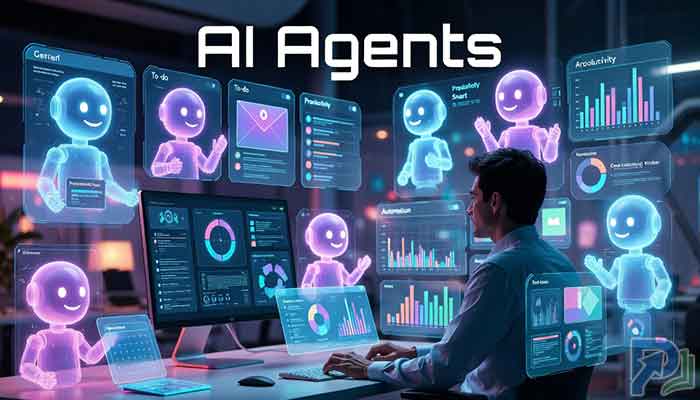
AI agents are no longer a futuristic concept — they are the most powerful productivity tools available to individuals right now. In 2026, these autonomous systems don’t just answer questions; they plan your day, execute multi-step tasks, monitor your inbox, manage your calendar, and adapt to your working style over time.
Whether you’re a solo entrepreneur, a remote professional, or a power user looking to reclaim hours from repetitive work, the right AI agent can act as a full-time digital assistant that never sleeps. This guide breaks down the best autonomous AI agents available today, what makes each one stand out, and how to choose the right fit for your workflow.
Table of Contents
What Are AI Agents — and Why Do They Matter in 2026?
Traditional AI tools respond to a single prompt and stop. AI agents, by contrast, are autonomous systems capable of reasoning, planning, and executing multi-step workflows with minimal human input.
Think of an AI agent as the difference between hiring someone to answer one email versus hiring a chief of staff who manages your entire communication pipeline. In 2026, the best agents can:
- Browse the web and synthesize information on your behalf
- Write, send, and follow up on emails automatically
- Break a large goal into sub-tasks and execute each one
- Integrate with third-party apps like Notion, Slack, Google Calendar, and more
- Learn from your preferences and get smarter over time
This shift from reactive chatbot to proactive collaborator is why AI agents have become the centerpiece of modern personal productivity.
The 7 Best AI Agents for Personal Productivity in 2026
1. Claude (Anthropic)
Claude has evolved from a conversational AI into a fully agentic assistant capable of handling complex, multi-turn workflows. With its ability to read documents, write code, conduct deep research, and maintain coherent context across long sessions, Claude is ideal for knowledge workers and content professionals.
Best for: Writing, research, analysis, document workflows Standout feature: Extended context window with highly nuanced reasoning Platform: Web, iOS, Android, API, Claude Code (CLI)
Key Capabilities:
- Deep research mode with cited web browsing
- Code generation, debugging, and execution
- File analysis (PDFs, spreadsheets, docs)
- Integrated memory for personalized responses
Read More: AI Video Editor Tools With Full Scene Generation (2026)
2. OpenAI Operator
OpenAI’s Operator is a browser-native AI agent designed to complete real-world tasks on your behalf — booking appointments, filling out forms, purchasing items, and navigating complex websites. It uses a computer-use framework that lets it operate like a human browsing the web.
Best for: Web-based task delegation, e-commerce, scheduling Standout feature: Fully autonomous browser control Platform: Web (ChatGPT Pro)
Key Capabilities:
- Autonomous web navigation and form completion
- Multi-step online task execution
- Integration with ChatGPT’s broader ecosystem
3. Microsoft Copilot (with Autonomous Agents)
Microsoft Copilot, deeply embedded in the Microsoft 365 suite, now includes autonomous agent capabilities that can draft emails in Outlook, summarize Teams meetings, generate Excel models, and update PowerPoint decks — all without manual prompting.
Best for: Office workers, enterprise users, Windows power users Standout feature: Native integration across the entire Microsoft 365 stack Platform: Windows, Microsoft 365 apps, web
Key Capabilities:
- Autonomous task execution in Word, Excel, Outlook, Teams
- “AI agents for Windows” built directly into the OS
- Custom agent creation via Copilot Studio
4. Google Gemini Advanced (with Project Astra)
Google’s Gemini Advanced, combined with Project Astra’s real-time multimodal capabilities, delivers one of the most context-aware AI personal assistants available. It integrates tightly with Google Workspace, making it a natural fit for Gmail and Google Drive power users.
Best for: Google Workspace users, multimodal tasks Standout feature: Real-time reasoning across text, images, video, and audio Platform: Web, Android, Google apps
Key Capabilities:
- Deep Google Workspace integration (Docs, Gmail, Drive, Calendar)
- Real-time screen awareness via Project Astra
- Long-context document understanding
5. Devin (Cognition AI)
Devin is the world’s first fully autonomous AI software engineer. For developers and technical users, Devin can plan and execute entire software projects — from reading documentation to writing, testing, and deploying code — with minimal human intervention.
Best for: Developers, technical professionals, software teams Standout feature: End-to-end software development autonomy Platform: Web (API access)
Key Capabilities:
- Independent code planning and execution
- Runs its own shell, browser, and code editor
- Handles bug reports, feature requests, and full sprints
6. n8n + AI Agent Nodes (Self-Hosted Automation)
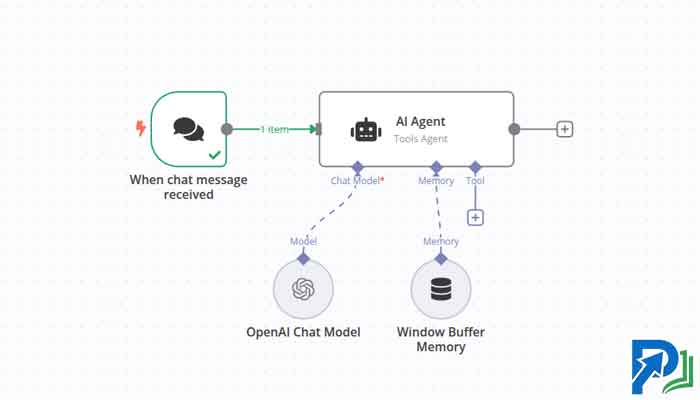
For technically savvy users who want complete control, n8n offers a self-hosted workflow automation platform with powerful AI agent nodes. You can chain together LLM calls, API integrations, and logic flows to build entirely custom autonomous workflows without relying on any single vendor.
Best for: Power users, developers, privacy-conscious professionals Standout feature: Total customizability and vendor independence Platform: Self-hosted (Linux, Docker), cloud option available
Key Capabilities:
- Visual drag-and-drop workflow builder
- Native AI agent nodes with memory and tool use
- Connects to 400+ apps and services
7. Perplexity AI (with Assistant Mode)
Perplexity AI has expanded beyond search into a full-featured AI personal assistant with real-time web access, source citations, and task automation via its assistant mode. It excels at research-heavy productivity tasks where accuracy and source transparency matter.
Best for: Researchers, journalists, fact-heavy knowledge work Standout feature: Real-time cited research with source verification Platform: Web, iOS, Android
Key Capabilities:
- Real-time web search with verifiable citations
- Multi-step research workflows
- File upload and analysis
How to Choose the Right AI Agent for Your Needs
Not every AI agent is built for every person. Here’s a quick framework for making the right choice:
| Your Priority | Best AI Agent |
|---|---|
| Writing & deep research | Claude |
| Web tasks & online errands | OpenAI Operator |
| Microsoft 365 / Windows workflow | Microsoft Copilot |
| Google Workspace productivity | Gemini Advanced |
| Software development | Devin |
| Custom automation, full control | n8n |
| Real-time research & fact-checking | Perplexity AI |
The key questions to ask yourself:
- What tools do I already use? Choose an agent that integrates natively.
- How technical am I? Some agents require setup; others work out of the box.
- Do I need real-time data? Prioritize agents with live web access.
- How sensitive is my data? Self-hosted options like n8n offer maximum privacy.
The Future of AI Productivity: What’s Coming Next
The future of AI productivity is moving toward fully agentic operating systems — where an AI doesn’t just assist you but proactively manages your digital life. Several trends are defining this trajectory in 2026:
- Multi-agent collaboration: Systems where specialized agents (a research agent, a writing agent, a scheduling agent) work together on a single goal
- Persistent memory: Agents that remember your preferences, projects, and context across months of interaction
- On-device processing: AI agents running locally on your hardware for speed and privacy, with no cloud dependency
- Ambient computing integration: Agents embedded in glasses, earbuds, and wearables that respond to your real-world context
The productivity gains from autonomous workflow automation are not incremental — they are transformational. Early adopters who integrate the right AI agent into their daily workflow today will have a compounding advantage over the next several years.
Pros and Cons: AI Agents for Personal Productivity
Pros
- Massive time savings on repetitive, low-value tasks
- Always on — available 24/7 with no downtime
- Adaptable to a wide range of professional and personal use cases
- Scalable — one person can operate at the output level of a small team
- Continuously improving — models and capabilities update regularly
Cons
- Privacy concerns — cloud-based agents process sensitive data on external servers
- Learning curve — getting maximum value requires prompt engineering and setup
- Hallucination risk — AI agents can make mistakes, especially in high-stakes tasks
- Cost — premium tiers for the most powerful agents carry monthly subscription fees
- Over-reliance risk — critical thinking and skill development can atrophy if delegation becomes excessive
Final Verdict
The best AI agent for personal productivity in 2026 depends entirely on your specific workflow. For most knowledge workers, Claude offers the deepest reasoning and most versatile capabilities. For those embedded in the Microsoft ecosystem, Copilot is the seamless choice. And for developers who want full autonomy, n8n or Devin represent the cutting edge.
What’s undeniable is that AI agents have crossed a threshold in 2026. They are no longer optional productivity upgrades — they are fast becoming a baseline requirement for professionals who want to remain competitive.
Frequently Asked Questions (FAQs)
Reference:
- Anthropic Research Blog — Primary source on Claude’s agentic capabilities
- MIT Technology Review: The Age of AI Agents — Authoritative coverage of the AI agent landscape