Introduction: The Race to 6G Has Already Begun
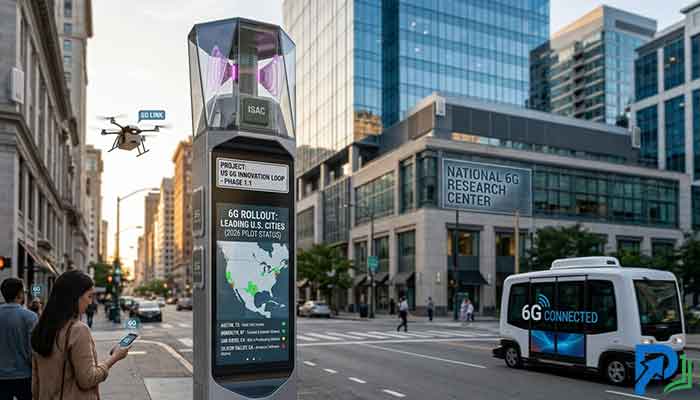
The 6G rollout may still be a few years from your smartphone, but make no mistake — the groundwork is being laid right now, and certain American cities are already pulling ahead. In 2026, the United States finds itself in a pivotal moment: no commercial 6G network exists yet, but the research institutions, government initiatives, and private-sector investments shaping the future of telecommunications are concentrated in a handful of key metros.
This article breaks down exactly where the US stands, which cities are emerging as early leaders, and what the realistic timeline looks like for everyday consumers.
The Reality of 6G in 2026: Research Phase, Not Consumer Phase
Before diving into city-level activity, it’s critical to set accurate expectations. In 2026, there are no commercial 6G networks available to consumers anywhere in the world — not in the US, South Korea, Japan, or China. What exists is a highly active global research and standardization phase.
Think of where 6G stands today the same way 5G stood around 2012–2014: white papers, university testbeds, government roadmaps, and corporate R&D labs. Consumer devices are not expected until the early 2030s.
Key 2026 milestones to understand:
- 3GPP Release 21 — the first official 6G specification document — will have its technical scope and timeline confirmed by June 2026. This is the industry’s clearest checkpoint yet.
- The ITU’s IMT-2030 framework has already defined high-level 6G performance targets, including speeds up to 10× faster than 5G and connection density of up to 100 million devices per square kilometer.
- First commercial deployments are broadly expected around 2030, with full consumer-scale adoption likely between 2031 and 2035.
6G vs 5G Speed: What the Upgrade Actually Means
Understanding the 6G rollout requires knowing why it matters. The performance leap from 5G to 6G is not incremental — it is generational.
| Metric | 5G (Current) | 6G (Projected) |
|---|---|---|
| Peak Speed | 10–20 Gbps (ideal) | Up to 1 Tbps |
| Latency | ~1 millisecond | Under 100 microseconds |
| Device Density | ~1M devices/km² | ~100M devices/km² |
| Key Feature | Enhanced mobile broadband | AI-native, sensing + communication |
The jump to near terabit-per-second speeds and sub-100-microsecond latency is what makes 6G transformative for industries like autonomous vehicles, industrial robotics, holographic communication, and large-scale IoT connectivity in 2026 and beyond.
Critically, 6G is expected to be the first generation where machine-to-machine communication outweighs human-to-human communication — a fundamental shift in what a “network” is even designed to do.
Which US Cities Are Leading the 6G Rollout in 2026?
While no city has a live 6G network, several US metros are home to the research institutions, federal programs, and corporate labs that are actively defining what 6G will become. Here’s where the action is:
1. Los Angeles, California — The 2028 Olympic Proving Ground

Los Angeles is arguably the single most important US city for near-term 6G development, and it has a hard deadline: the 2028 Summer Olympics.
The NTIA (National Telecommunications and Information Administration) has launched Mission LA 2028, an industry-led initiative to demonstrate early 6G technologies live at the Olympic Games. The initiative aims to showcase AI-powered networking, integrated sensing and communication (ISAC), and immersive XR experiences at one of the most-watched global events in history.
What makes LA especially significant:
- 28 companies submitted Letters of Intent (LOIs) to participate in Mission LA 2028 demos.
- Industry stakeholders — not taxpayers — will plan and fund the demonstrations, with the NTIA serving as convener and regulatory facilitator.
- Qualcomm has publicly stated the US government asked the industry to target having commercial 6G phones ready for the 2028 Olympics, with a 2029 commercial launch as the goal.
- Phase II of the initiative is currently underway as of mid-2026, with updated demo plans due by June 18, 2026.
LA is not just a backdrop — it is the US government’s chosen stage for proving American 6G leadership to the world.
2. New York City, New York — University Research Powerhouse

New York City is home to NYU WIRELESS, one of the world’s most cited and respected academic wireless research centers. Based at New York University’s Brooklyn campus, NYU WIRELESS has been at the forefront of millimeter-wave 5G research since the early 2010s, and has already pivoted its focus toward 6G.
In January 2026, NYU WIRELESS hosted its fourth annual workshop — themed “Twenty Years of Massive MIMO: What’s Next?” — bringing together top global wireless researchers to chart the path ahead. Faculty members from the center have also been recognized by the international Women in 6G initiative for their contributions to the field.
NYC’s role in the 6G rollout includes:
- Active academic research into terahertz (THz) spectrum propagation models.
- Industry affiliate partnerships with major telecom and device manufacturers.
- Proximity to major carriers’ corporate headquarters and standards bodies.
3. Boston, Massachusetts — The Open6G Engineering Hub
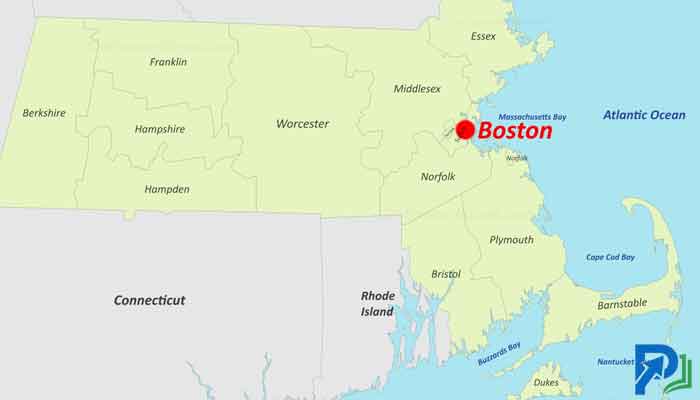
Boston, specifically through Northeastern University’s Institute for the Wireless Internet of Things (WIoT), is emerging as a critical engineering and testing hub for next-generation networks.
Northeastern launched the Open6G DOD Research Center — a federally backed, industry-university cooperative research hub — specifically to accelerate beyond-5G systems research. It has also established an Open Testing and Integration Center (OTIC) in Burlington, MA, for Open RAN technology testing, a foundational layer of 6G infrastructure.
Boston’s 6G ecosystem advantages:
- Direct Department of Defense (DoD) funding and partnership.
- Focus on open, programmable, and disaggregated network architectures — a cornerstone of 6G infrastructure design.
- Strong pipeline of engineering talent through its dense concentration of research universities.
4. Washington, D.C. — Policy and Standards Capital
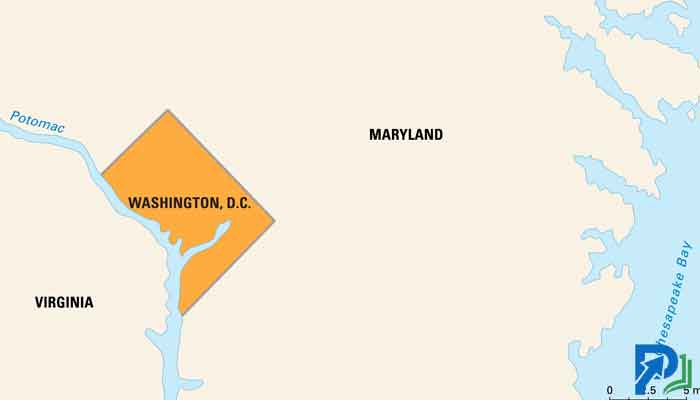
Washington, D.C. isn’t a testbed city in the traditional sense, but it is the command center for US 6G policy. The NTIA — housed here — is the federal agency most directly responsible for shaping spectrum policy, coordinating standards participation, and funding domestic 6G development.
Key D.C.-based 6G activity in 2026:
- NTIA’s active management of the Mission LA 2028 program.
- Coordination with the FCC on spectrum access for terahertz band research.
- The Next G Alliance (convened by ATIS, headquartered in D.C.) brings together AT&T, Verizon, T-Mobile, Apple, Google, Samsung, Qualcomm, Intel, Microsoft, and others to develop a unified 6G National Roadmap.
Without policy alignment from Washington, no city’s 6G research can reach commercial scale.
5. San Francisco Bay Area, California — Corporate R&D and Edge AI
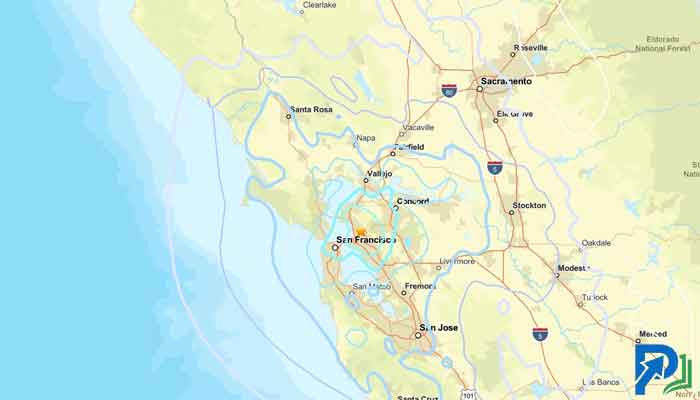
Silicon Valley and the broader Bay Area are home to the corporate R&D engines driving 6G innovation: Qualcomm, Intel, Apple, Google, and a dense ecosystem of semiconductor startups.
The Bay Area’s contribution is less about public testbeds and more about the chips, AI systems, and device architectures that will make 6G work in the real world. Qualcomm, for example, has been central to terahertz modem research and has been publicly engaged with the US government’s 2028 commercial device timeline.
Additionally, Waymo’s autonomous vehicle deployments in San Francisco are already stress-testing the kind of ultra-low-latency, machine-to-machine communication that 6G is ultimately designed to serve at scale.
The Next G Alliance: America’s Industry Coalition
One of the most important structures behind the US 6G rollout is the Next G Alliance, convened by ATIS (Alliance for Telecommunications Industry Solutions) and headquartered in Washington, D.C.
Founded in 2020, the alliance includes:
- Carriers: AT&T, Verizon, T-Mobile, UScellular
- Tech giants: Apple, Google, Microsoft, Intel, IBM
- Equipment makers: Ericsson, Nokia, Samsung, Qualcomm
The alliance has published a 6G National Roadmap organized around six strategic pillars: global leadership in standards, sustainability, trust and security, spectrum policy, workforce development, and economic competitiveness. This roadmap is the closest thing the US has to a unified national 6G strategy.
6G Infrastructure News: What’s Being Built Right Now
Even before 6G arrives, key infrastructure upgrades happening now will determine how quickly cities can absorb the new technology.
5G Advanced (5G+): AT&T is developing a 5G Advanced (5G+) platform designed to boost current 5G performance while increasing device density per cell site. This bridging technology prepares existing infrastructure for eventual 6G integration.
Terahertz testbeds: Researchers at SUNY Polytechnic Institute and Florida International University have built a J-band THz testbed operating between 220 GHz and 330 GHz, providing experimental data on how terahertz signals behave in real-world conditions — data that will directly inform 6G antenna and network design.
AI-native networking: Nvidia announced in late 2025 a $1 billion investment in Nokia to develop AI-RAN (AI Radio Access Network) solutions — a core component of 6G’s AI-first network architecture. The AI-RAN Alliance, ORAN Alliance, and 6ARROW initiative are all advancing the open, AI-integrated infrastructure that 6G requires.
When Is 6G Coming to the USA? A Realistic Timeline
| Year | Milestone |
|---|---|
| 2026 | 3GPP confirms Release 21 scope; THz research accelerates; Mission LA 2028 Phase II underway |
| 2027–2028 | Early AT&T/Verizon lab trials; 6G demos at LA Olympics |
| 2029 | Potential first pre-commercial 6G devices (per Qualcomm/US government goal) |
| 2030 | First commercial 6G deployments expected (limited, urban) |
| 2031–2032 | Consumer-grade 6G devices enter retail markets |
| 2033–2035 | Broad national 6G coverage in major metro areas |
This timeline reflects the global consensus among standards bodies, carriers, and device manufacturers. Early access will go to enterprise customers, government users, and tech-forward urban areas — not rural America, which is still catching up on 5G and 4G coverage.
The Global Context: Where the US Stands in the 6G Race
The US is not the only country investing heavily in 6G. The competitive landscape shapes domestic urgency:
- South Korea & Japan are targeting limited 6G launches as early as 2028–2029, backed by significant national investment. South Korea alone committed $195 million over five years specifically to test 6G components by 2026.
- China is developing 6G through its IMT-2030 Promotion Group and is widely regarded as the US’s primary competitor in standards influence.
- Europe is targeting broader testing from 2026 through programs like Hexa-X II, aiming for commercial services by 2030.
American leadership in 6G is not guaranteed. The NTIA has explicitly framed it in national security terms: “The nation that sets the standards and controls the underlying infrastructure ultimately determines the security, openness, and competitiveness of the global communications marketplace.”
Conclusion: 6G Rollout Is a Marathon, Not a Sprint
The 6G rollout in the United States is a structured, multi-year effort that is well underway — even if consumers won’t notice it until around 2030. In 2026, Los Angeles, New York, Boston, Washington D.C., and the San Francisco Bay Area are the cities doing the foundational work that will define what 6G looks like for the rest of the country.
The Mission LA 2028 initiative gives the US a genuine near-term showcase moment. The Next G Alliance gives it an industry coalition with real alignment. And the research happening right now in university labs and corporate R&D centers is turning 6G from a vision into a buildable specification.
If you want to follow the 6G rollout in real time, bookmark push-wiki.com — we’ll track every major development as America’s next wireless generation moves from lab to city street.
Frequently Asked Questions (FAQs)
Sources: NTIA (ntia.gov), Nokia 6G Research, IEEE Transmitter, Light Reading, Semiconductor Engineering, RCR Wireless, NYU WIRELESS